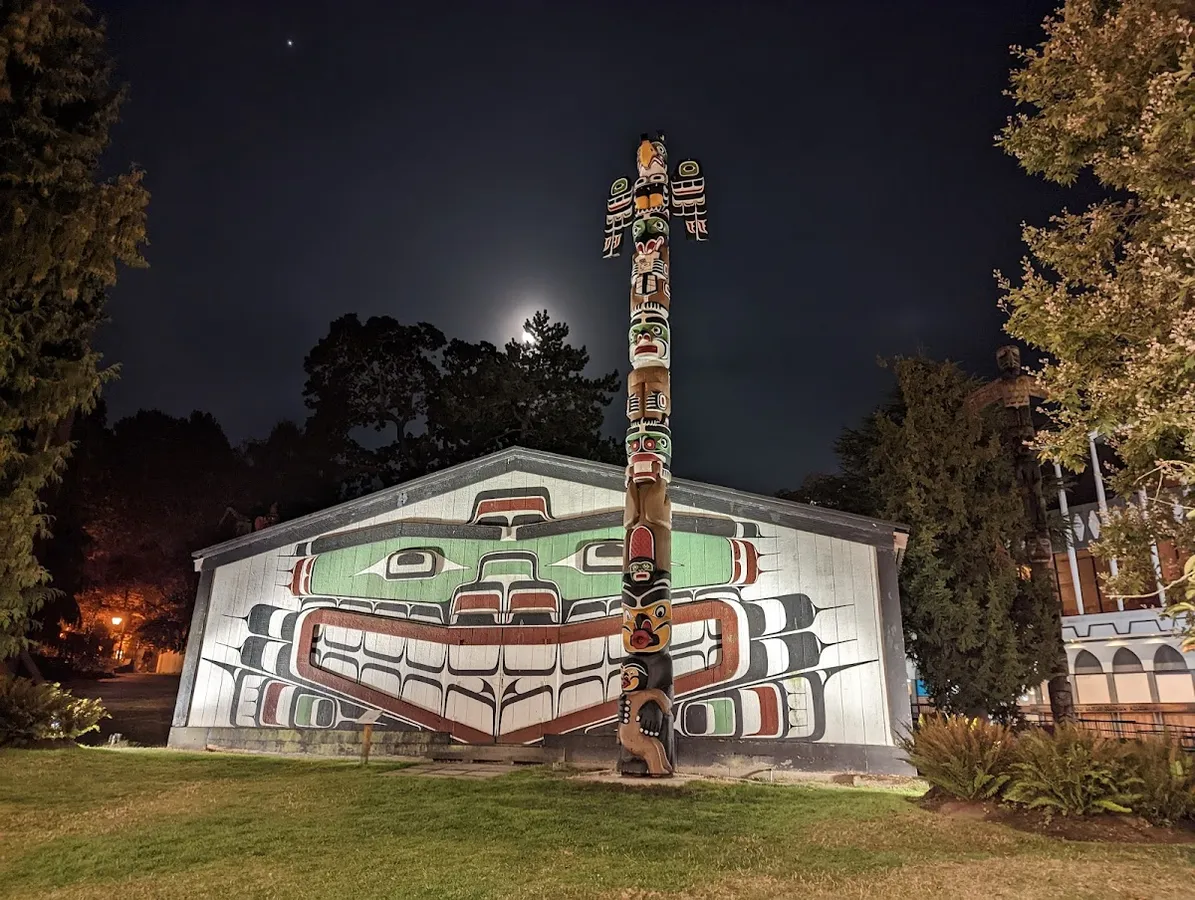


Mungo Martin House in Thunderbird Park
Hours
Services & Categories
About
Thunderbird Park, located right along Victoria's waterfront in the James Bay neighbourhood, centres on one of the most significant structures in the city: a traditional Kwakwaka'wakw big house built in the 1950s and reconstructed in the 1990s. This isn't a dusty museum piece behind velvet ropes—it's an authentic recreation of the kind of ceremonial house that would have anchored Indigenous communities along the Pacific Northwest coast for generations. The house itself, with its massive cedar posts and traditional design, tells a story about Kwakwaka'wakw culture and the legacy of the artisan it's named after, Mungo Martin, a respected carver and cultural leader.
What strikes visitors most is how the house sits within Thunderbird Park's broader landscape. You're not just viewing a single building; you're walking through a space filled with impressive totem poles and traditional art installations that represent different First Nations artistic traditions. The park's design invites you to move at your own pace, taking in the details of the carvings and the relationship between the structures and the surrounding environment. On a clear day, the location offers views toward the Inner Harbour, and the whole experience feels integrated into Victoria's waterfront rather than cordoned off as a separate attraction.
The park operates around the clock, which means you can visit whenever suits your schedule—whether that's during golden hour on a summer evening or on a rainy winter morning when the atmosphere feels particularly contemplative. The moderate price point makes it accessible for families or anyone passing through the neighbourhood. With a solid 4.7-star rating from visitors, people consistently appreciate what they find here, though like many outdoor attractions, your experience will be shaped by weather and time of day.
From a practical standpoint, the James Bay location makes Mungo Martin House easy to reach if you're already exploring Victoria's downtown or the Inner Harbour area. The park is walkable from nearby attractions like the Rose Garden, and it's in the same neighbourhood as other cultural sites worth investigating. Since the park is accessible at all hours, you won't feel pressured by opening times, though you'll obviously get the best sense of the space and carvings during daylight. Wear layers—being right by the water means the temperature can shift quickly, and you'll be spending time outdoors.
This is genuinely a place where Victoria's relationship with First Nations culture is visible and tangible. It's not a comprehensive museum experience—you won't find extensive interpretive panels or guided tours as standard offerings—but that's somewhat the point. The house and the artworks speak for themselves to visitors willing to spend time looking and reflecting. Whether you're a longtime Victoria resident noticing details you'd missed before or a visitor seeking to understand the Indigenous history that shaped this coast, there's something substantive to encounter here.